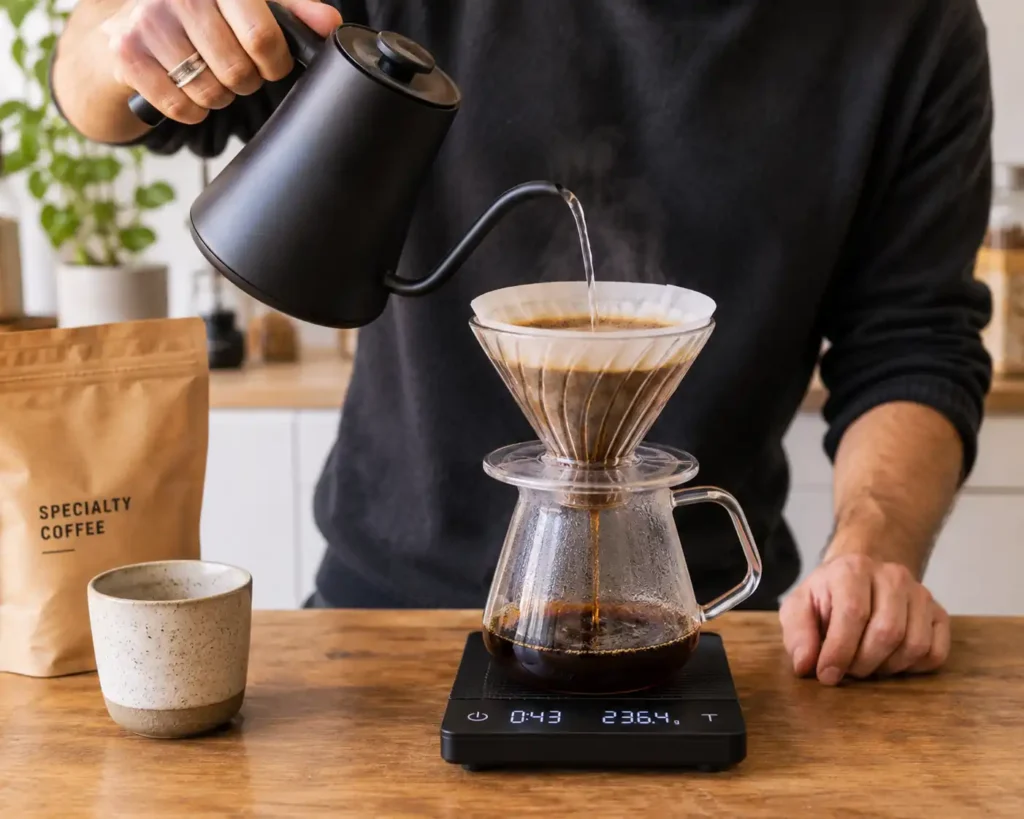
If you want to get into better coffee, you only need to change a few things: buy fresh whole beans from a roaster, grind them just before brewing, measure your coffee and water, and start with a simple brewing method. You do not need expensive equipment, and you do not need to know every term.
This guide gives you a simple path in. To understand what makes coffee “good” in the first place, read what specialty coffee is.
1. Buy fresh whole beans
Freshness matters more than almost anything else. Look for a bag with a roast date (not only a best-before date) and use the coffee within a few weeks of roasting. Whole beans stay fresh far longer than pre-ground coffee. Buy small bags more often rather than one large bag.
2. Start with a light to medium roast
Lighter roasts show more of the origin: fruit, flowers, sweetness. Medium roasts are rounder and more chocolatey. If you are used to dark roast and find light roast sour, start with a medium roast and move lighter as your taste adapts.
3. Pick a simple brewing method
- AeroPress: forgiving, quick and cheap. A very good first method.
- Pour-over (V60, Kalita): clean and light, lets you taste the coffee clearly.
- French press: easy, full-bodied and heavier in the cup.
Espresso is the hardest to master at home. Do not start there.
4. Use a scale and a recipe
A kitchen scale is the best first purchase after a grinder. A good starting ratio is 1 gram of coffee to 16 grams of water, so 15 grams of coffee for 240 grams of water. Use water just off the boil, around 90 to 96°C. Then change one variable at a time.
5. Get a decent grinder
A burr grinder gives you an even grind. Pre-ground and blade-ground coffee both extract unevenly. Our grind size guide shows what to use for each method.
6. Taste and take notes
Try coffees from different origins and processes, and write down what you like. After a few weeks, you will notice patterns: maybe you prefer fruity, washed Ethiopian coffees, or chocolatey Brazilian ones. Learn the vocabulary in coffee tasting notes and in our guide to processing methods.
7. Visit specialty coffee shops
The fastest way to learn is to drink good coffee made by someone who cares. Order a filter coffee, ask what is on the bar, and talk to the barista. Use our Guide to find specialty coffee shops near you, or open the map.
Common beginner mistakes
- Buying pre-ground coffee in big bags.
- Guessing the amounts instead of weighing them.
- Boiling water straight from the kettle onto the grounds without letting it cool slightly.
- Changing three things at once and not knowing which one helped.
Coffee for beginners: frequently asked questions
What is the best coffee for beginners?
A fresh, medium-roasted, single origin or well-made blend, brewed as filter coffee. Chocolate, nut and caramel notes are an easy way in.
Do I need to spend a lot?
No. A scale, a burr grinder and an AeroPress or pour-over cone is a complete setup.
How much coffee should I use per cup?
Start with about 15 grams of coffee for a 240 ml cup, and adjust to taste.