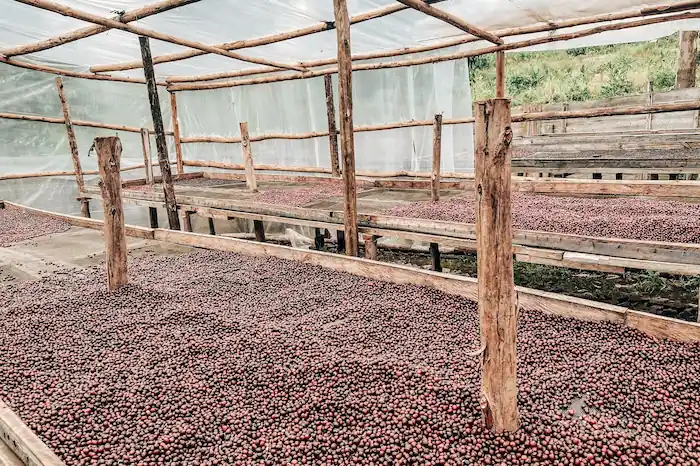
Coffee processing is how the coffee seed is separated from the fruit that surrounds it and dried. It happens on the farm, right after harvest, and it has a major effect on flavour. The three most common methods are washed, natural and honey: washed coffees taste clean and bright, naturals taste fruity and heavy, and honeys sit in between.
Processing is one of the choices that shapes the quality of specialty coffee. This guide explains each method and how it tastes in the cup.
Why coffee is processed
A coffee bean is the seed of a red fruit called a cherry. Once picked, the cherry is perishable, so it must be dried to a stable moisture level (around 10 to 12%) before being stored and shipped. How that happens changes how much fruit sugar and fermentation character stays with the seed.
The main coffee processing methods
| Method | How it works | Typical taste |
|---|---|---|
| Washed | Fruit is removed before drying; the seed is fermented and rinsed, then dried | Clean, bright, high acidity, clear origin character |
| Natural | Whole cherries are dried with the fruit still on | Fruity, sweet, heavy body, sometimes wine-like |
| Honey | Skin is removed but some sticky fruit (mucilage) is left on while drying | Sweet, rounded, balanced between washed and natural |
| Anaerobic | Coffee is fermented in sealed tanks without oxygen | Intense, fruity, sometimes funky or boozy |
Washed process
In the washed (or wet) process, the skin and most of the fruit are removed with a machine, and the seed is left in water to ferment for a short time so the remaining mucilage breaks down. It is then rinsed and dried. Because little fruit stays on the seed while it dries, the cup shows the character of the origin and variety clearly. Washed coffees are often described as clean and juicy, with bright acidity.
Natural process
In the natural (or dry) process, the whole cherry is dried, often on raised beds, for several weeks. The seed absorbs sugars from the fruit while drying. Natural coffees are typically sweet and fruity, with notes such as strawberry, tropical fruit or wine. The method needs care: fruit that dries unevenly or ferments too long can taste sour or musty.
Honey process
The name comes from the sticky mucilage, not from honey. Producers remove the skin but leave part of the mucilage on the seed. The more they leave, the sweeter and heavier the cup tends to be. Honeys are sometimes labelled yellow, red or black to show how much mucilage was kept.
Anaerobic and experimental processing
Some producers ferment the coffee in sealed tanks for a controlled time, or use specific yeasts and other techniques. These coffees can be very intense and fruity. They are a small but growing part of specialty coffee, and they can be polarising.
How to choose
- Prefer a clean, crisp cup? Try washed coffees.
- Like fruit-forward and sweet? Try naturals.
- Want something in the middle? Try honeys.
The process is usually printed on the bag next to the origin. Pairing it with tasting notes helps you learn your preferences: see coffee tasting notes. Our process and roasting guides go further.
Frequently asked questions
Which processing method is best?
None is better in general. Each shows different qualities, and a well-made washed or natural coffee can be excellent.
Does processing change caffeine?
No. Caffeine content depends on the species and variety, not on how the cherry is processed.
Where can I find different processes to try?
Browse specialty coffee roasters in our Guide.